What Happens to Your Roof After a Microburst?
If you’ve lived in Mesa through a few monsoon seasons, you already know the pattern: clear skies, a sudden wall of dust, then wind and rain that seem to come out of nowhere and disappear just as fast. That’s often a microburst — and if it passed over your neighborhood, your roof may be carrying damage you can’t see from the driveway.
Here’s what’s actually happening to tile and asphalt shingle roofs during and after these storms, and why the window between “storm passed” and “problem solved” matters more than most homeowners realize.
What is a microburst, exactly?
A microburst is a concentrated column of sinking air within a thunderstorm that hits the ground and spreads outward in straight-line winds, typically across an area less than about 2.5 miles wide. Unlike a tornado, the wind isn’t rotating — it’s blasting outward in a burst, which is why damage often looks like everything was pushed or flattened in one direction rather than twisted.
Arizona is especially prone to a specific type called a dry microburst, common during monsoon season (roughly mid-June through September). Rain falls from the thunderstorm base but evaporates before reaching the ground in our low-humidity air; that evaporation cools the air rapidly, and the now-heavier air plunges downward and slams into the surface. Wind gusts from these events commonly reach 60–80 mph, and severe cases can exceed 100 mph — comparable to a strong hurricane or a low-end tornado, just without the rotation. Dry microbursts are also frequently the trigger behind the dust storms (haboobs) that roll through the Valley.
How asphalt shingle roofs react in a microburst
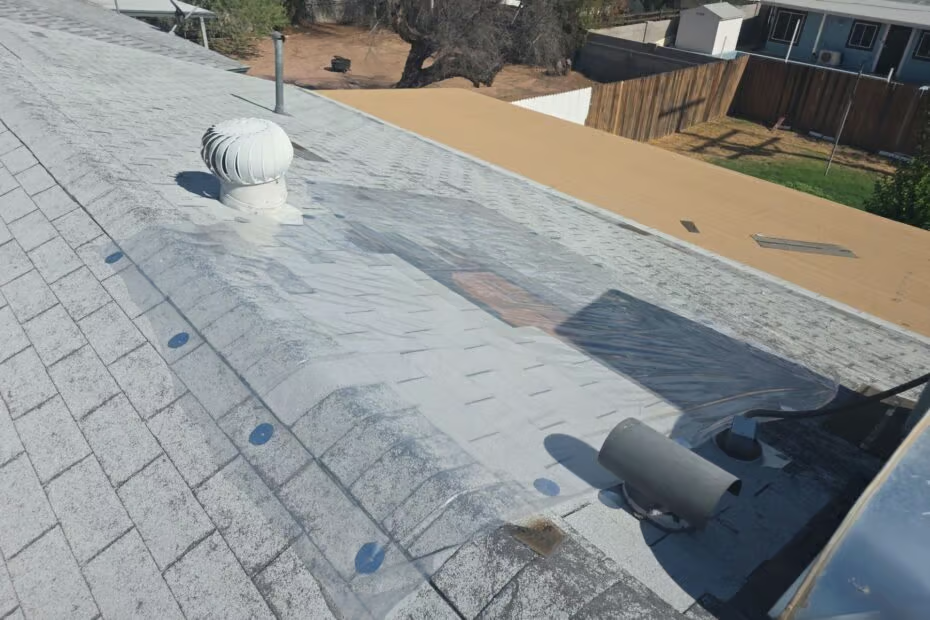
Asphalt shingles are held down by an adhesive sealant strip that bonds each shingle to the one below it. In Mesa’s heat, that sealant is under constant thermal stress — years of expansion and contraction, plus UV exposure, can quietly weaken the bond long before a storm ever arrives. A sudden 70+ mph gust catches the edge of a shingle, breaks that bond, and lifts it. Once one shingle goes, the wind gets underneath its neighbors, and you can lose several courses of shingles in seconds.
What’s left behind is the underlayment, a thin layer of felt or synthetic material that was designed only as a secondary water barrier, not as a roof surface on its own. It’s not built for direct sun and rain over any length of time. If wind-driven rain or debris tears the underlayment, the roof decking is exposed, and water can reach your attic and ceiling during the same storm.
How tile roofs react in a microburst
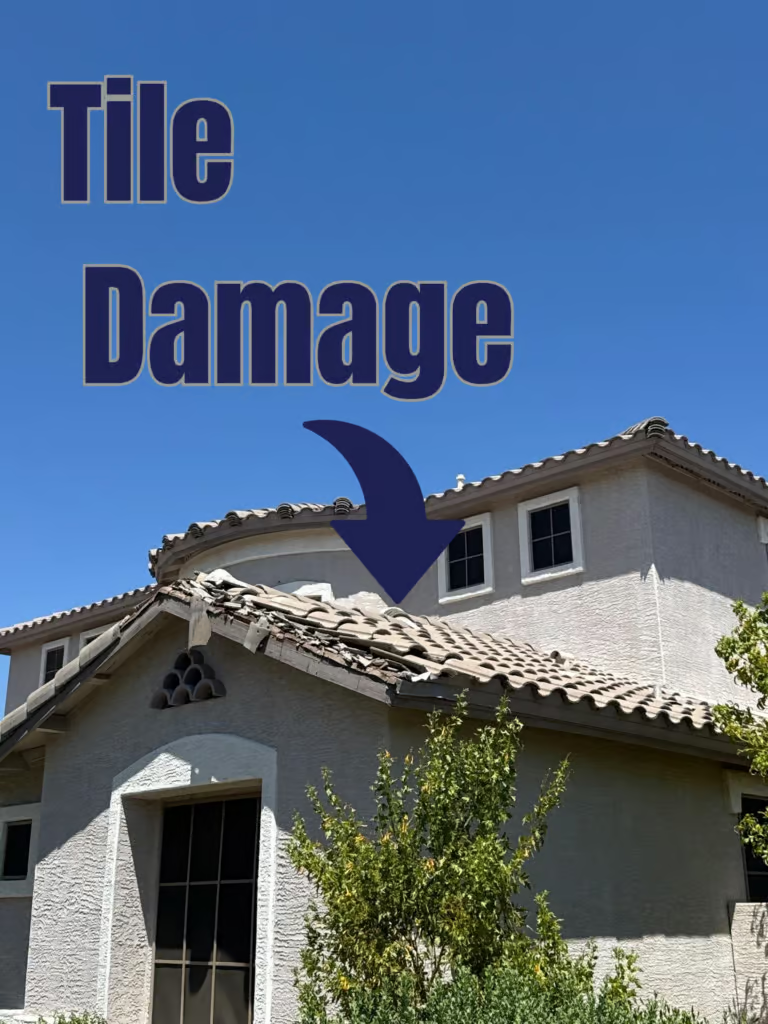
Tile roofs are heavier and generally more wind-resistant than shingles, but they fail differently, not less seriously. High gusts create uplift at ridges, hips, and roof edges—the same aerodynamic effect that lifts an airplane wing—and that uplift can crack tiles, shift them out of alignment, or launch them off the roof entirely. Flying debris (branches, patio furniture, tiles from a neighbor’s roof) adds impact damage on top of wind damage, cracking tiles that then let water past even if they’re still sitting in place.
Just like shingles, tile is really a weather-shedding layer over an underlayment that does the actual waterproofing. Tile underlayment tends to be older and more brittle than what’s used under shingles, and it’s rarely inspected until there’s a visible problem. A handful of cracked or missing tiles can look minor from the ground while quietly exposing that underlayment to sun and water it was never meant to face alone. Cracked or dislodged tiles are also a safety hazard themselves — they can slide and fall well after the storm has passed.
Why “it’s just a few missing shingles or tiles” is riskier than it sounds
In both cases, the core issue is the same: once the outer roofing material is compromised, the underlayment becomes your only line of defense, and it wasn’t designed to be a long-term roof on its own. Arizona monsoon season rarely delivers just one storm; it’s common to get several more rounds of wind and rain in the following weeks. A roof that’s been quietly compromised by one microburst is far more vulnerable to serious water intrusion, wood rot, insulation damage, and damage to interior ceilings during the next one.
And because much of this damage sits at ridge lines, behind parapet walls, or under tiles that look fine from the ground, many homeowners don’t discover the full extent of it until they see a stain spreading across a ceiling, weeks after the storm that caused it.
What to do if you suspect storm damage
- Stay off the roof. Storm-damaged roofing can be unstable, and cracked tiles or torn shingles are sharp and unpredictable underfoot.
- Document what you can see safely — photos from the ground, your yard, or a window are useful for insurance.
- Get a professional inspection quickly, even if the damage looks minor. The visible damage is often the smallest part of the problem.
- Get the roof covered before the next rain, not after.
How Weather-Tite Roofing and Construction can help
That last point is where timing matters most, and it’s exactly what we’re set up for.
- Emergency tarping — If your roof has been compromised, we can get it covered quickly to stop water intrusion while you sort out next steps, rather than leaving your home exposed to the next monsoon round.
- Full roof inspections — We check the things a ground-level look can’t catch: lifted flashing, cracked or shifted tiles, compromised underlayment, and hidden decking damage — so you know the real scope before deciding anything.
- Honest guidance on repair vs. replacement — Not every storm-damaged roof needs a full replacement, and not every “few missing shingles” job is actually minor once we’re up there. We walk you through what we find and what your realistic options are, so you can make an informed decision instead of a rushed one.
- Full replacements — When a roof’s age, extent of damage, or overall condition means repair isn’t the right long-term call, we handle the full replacement with both tile and asphalt shingle systems.
If a recent storm has you wondering what’s really going on up there, it’s worth a look before the next round of monsoon weather rolls through.